
Let's be real about what stress actually does to desire
Your partner used to reach for you. Now they scroll. Or sleep. Or disappear into work the moment they walk through the door. The rejection stings, sure. But here's the harder part: you can't fix it by being sexier, more patient, or more understanding. Stress doesn't kill desire because you've become less attractive. It kills desire because your partner's nervous system is in fight-or-flight mode, and their brain has literally deprioritized intimacy below email and sleep.
This is incredibly common, and it's also one of the loneliest feelings in a relationship. You're living with someone and feeling starved for touch. The frustration builds. Resentment follows. And before you know it, you're not even asking anymore.
Here's what I tell couples in my practice: the fastest way out of this loop isn't to pressure your partner into sex. It's to reclaim your own pleasure, consistently, without waiting for permission. Lemon vibrators and lemon clitoral vibrators are the exact tool for this transition because they give you back agency the moment your partner can't show up.
Why solo pleasure actually rebuilds connection
Countintuitive but true. When you abandon your own arousal waiting for your partner to want you, two things happen. First, you start resenting them for the deprivation. Second, you send the message that your pleasure is conditional on theirs. Both make the return to connection harder, not easier.
When you use a lemon vibrator or lemon clitoral vibrator regularly, something shifts. You remember that pleasure is yours first. You reduce the pressure on your partner to be your only source of satisfaction. And paradoxically, that pressure removal often makes them more available.
I also see this clinically: people who maintain a solo pleasure practice during disconnected periods have significantly shorter "return to intimacy" timelines than those who white-knuckle through celibacy waiting for their partner to snap out of it.
Starting your practice when they're in shutdown mode
Timing matters here. You're not doing this to punish your partner or make them jealous. You're doing this for you. That distinction changes everything.
Pick a time when your partner isn't around or is clearly unavailable. Morning before work. Late evening after they've settled into their phone or a show. The goal isn't secrecy for its own sake. It's respect for their current bandwidth. They're stressed. They're not ready to engage. Your solo practice isn't about them right now.
Start with 15 to 20 minutes. Lemon vibrators are efficient tools, which means you don't need to spend an hour waiting for arousal to build. Use the suction setting at a moderate intensity. Let yourself focus on sensation rather than outcome. If you finish in five minutes, that's fine. If it takes 25, that's also fine. The point is regularity, not performance.
The physical and mental shift that happens
After two or three weeks of consistent solo use, most people report something unexpected: their baseline pleasure recalibrates. What used to feel numb or flat starts to wake up again. The nervous system becomes less stuck in stress-response mode just from the act of prioritizing sensation.
You also get something less tangible but equally valuable: a reminder that your body still works, still responds, still deserves attention. When you're being rejected or avoided, it's easy to internalize that as a personal failing. Using lemon vibrators or lemon sexual toys reminds you that you're not broken. Your partner is just temporarily unavailable.
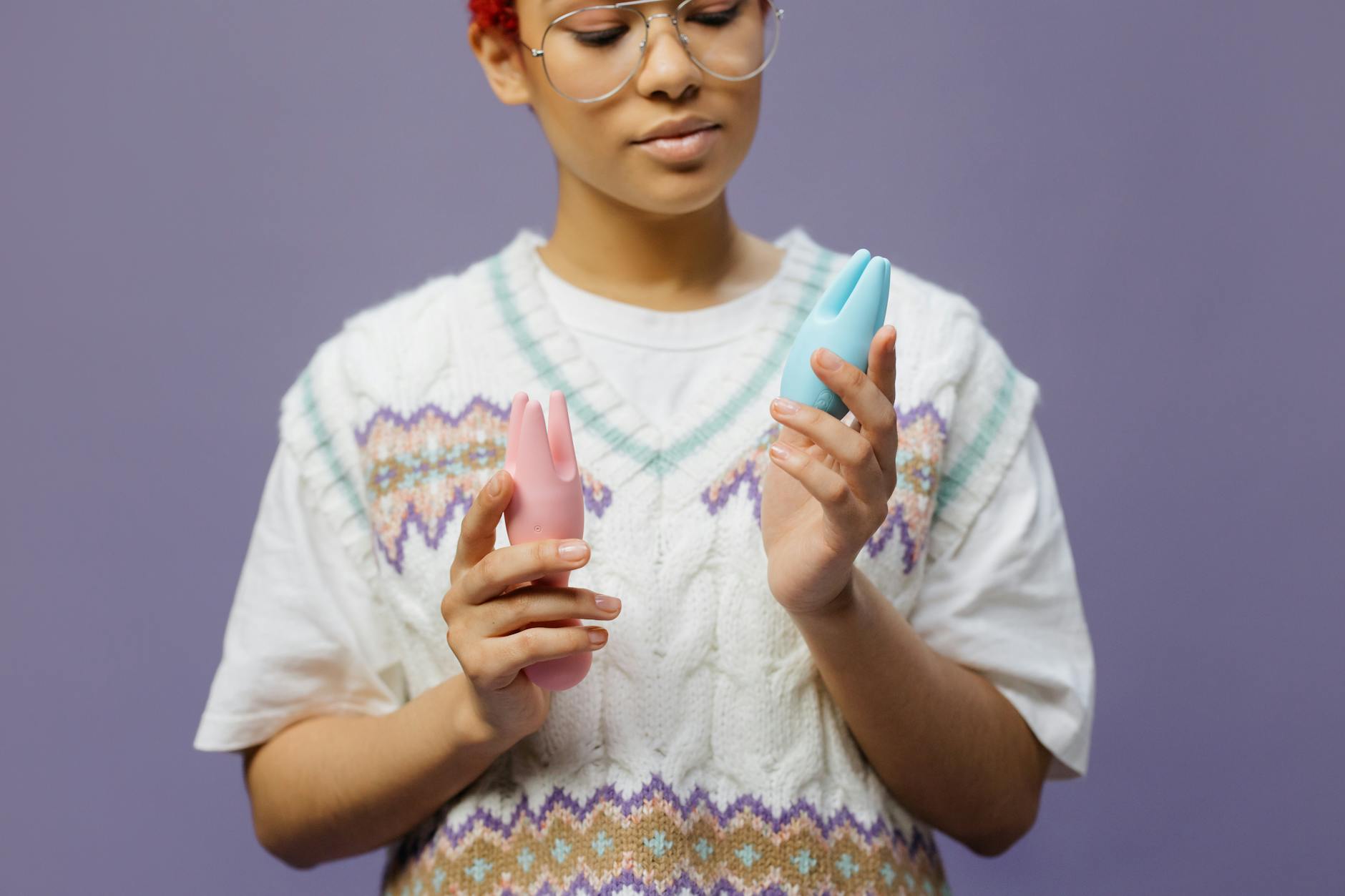
Photo by cottonbro studio on Pexels
When (and how) to reintroduce the conversation
After you've rebuilt your solo practice, your partner will likely notice something different. You're less clingy. Less bitter about the rejection. More grounded. This is your opening, but it's not the opening you might think.
Don't announce that you've been using lemon vibrators. That's not the point. Instead, once your partner's stress begins to ease, bring up intimacy as a conversation, not a demand. "I've missed you" is different from "I'm frustrated you don't want me." The first opens a door. The second puts them on trial.
If they ask what's changed in you, be honest. "I started prioritizing my own pleasure again instead of waiting for us to connect. It actually helped me feel less resentful." That's information, not accusation. It might also prompt them to want to reconnect because they'll hear that you're taking care of yourself, which reduces their guilt.
What to do if nothing changes after a few months
Sometimes stress lifts and desire doesn't return. Sometimes your partner is using stress as a convenient excuse for a deeper disconnection. Sometimes avoidance becomes a pattern rather than a phase.
If you're six months into regular solo practice and your partner still isn't engaging, that's when this stops being about lemon vibrators and starts being about whether you want to stay. That's also when a couples therapist becomes necessary, not optional. This isn't something I can fix in an article. It requires professional intervention.
But here's what I want you to know: you've done the work. You've rebuilt your own pleasure. You've set a boundary without being aggressive. You've given the relationship room to breathe. If your partner still won't show up, that's information about them, not about you.
The unexpected gift of solo practice during disconnection
Most of my clients come back six months later and say something like this: "I thought the vibrator was just for when my partner wasn't available. But honestly? I use it more now that we're reconnected because I stopped thinking of pleasure as something he gives me." That's the real shift. Lemon vibrators don't replace partnership intimacy. They dismantle the false belief that you need a partner to have legitimate pleasure.
When stress inevitably hits again. And it will. You won't be in crisis mode waiting for your partner to fix it. You'll have a tool. You'll have a practice. You'll have proof that your pleasure is yours to keep.

Photo by cottonbro studio on Pexels
Key takeaways for restarting during avoidance
Here's what actually works when your partner shuts down: consistency beats perfection. Fifteen minutes three times a week with a lemon vibrator will do more for your resilience than obsessing over why they've withdrawn. Solo pleasure isn't about replacing partnership. It's about refusing to disappear while your partner is stressed.
Use how to use lemon vibrators when your partner doesn't know about your toy as reference for privacy if needed, but also consider whether full secrecy is actually serving your relationship. Transparency around solo practice often softens the avoidance because it removes the shame.
If your partner's avoidance connects to a deeper issue like depression or anxiety, that's separate. A lemon clitoral vibrator won't fix clinical depression. But it can help you stay intact while they're getting treatment.
People also ask
Is it normal for partners to avoid sex when stressed?
Completely normal. Stress triggers the sympathetic nervous system (fight-or-flight), which actively suppresses arousal and sexual interest. Your partner isn't choosing to reject you. Their body is prioritizing survival over pleasure. The issue is when the avoidance becomes chronic or when your partner refuses to acknowledge that it's happening.
Will using a lemon vibrator make my partner feel inadequate?
Not if you approach it the right way. If your partner discovers your solo practice and interprets it as criticism of their sexual performance, that's a communication gap worth fixing directly. Most secure partners, once stress eases, are relieved to know you're taking care of yourself. Frame it as something for you, not against them.
How long before my partner returns to normal after stress?
It depends on the stress. A busy work season might last four to eight weeks. A major life transition could take months or years. The key isn't waiting passively. It's maintaining your own pleasure practice while they recover. That keeps you from spiraling into resentment.
Can lemon vibrators help if my partner has lost interest in sex entirely?
Lemon vibrators can't fix your partner's low desire. But they can prevent your own desire from eroding in the meantime. And they give you data: if your partner has no desire and you're frustrated, that's a sign you need to either renegotiate what your relationship looks like or seek couples counseling.
Should I tell my partner I'm using lemon vibrators during this disconnected period?
That's your call based on your relationship. Some couples benefit from transparency. Others benefit from discrete solo practices that don't add pressure. Consider your partner's stress level and your relationship's communication baseline. Honesty is usually better than discovery, but timing matters.
What if my partner wants to participate but I'm too hurt to invite them?
That's actually a sign you need to address the emotional wound, not just the physical one. How to use lemon vibrators when communication breaks down with your partner covers this in depth, but the short version is: solo pleasure can coexist with couples therapy.
Your pleasure matters right now. Not in the future when your partner unstresses. Not when they're ready. Now. A lemon vibrator gives you permission to claim that. Use it.