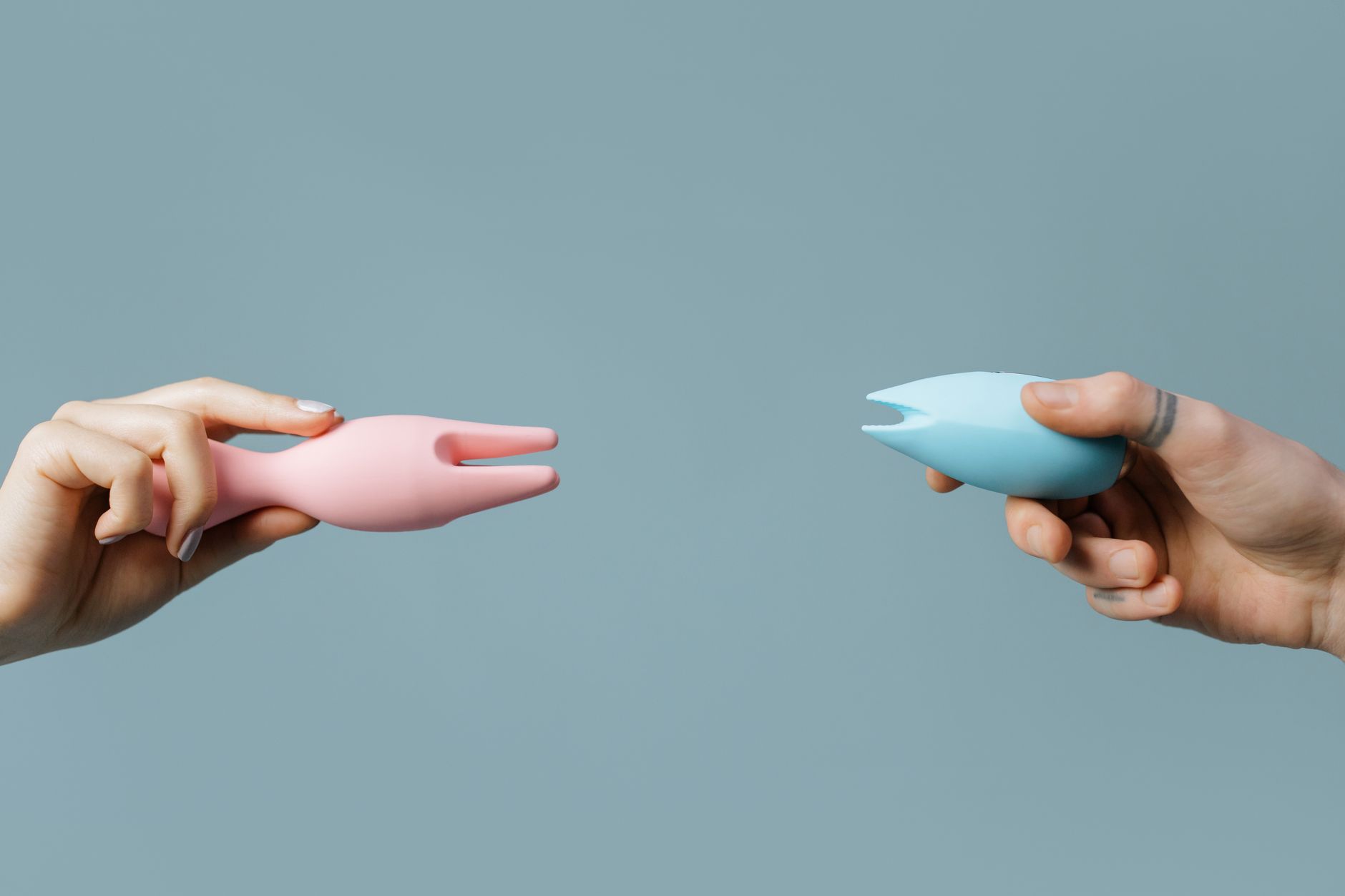
When a partner wants you to feel pleasure, it can weirdly make pleasure harder to access. The expectation itself becomes pressure. You're hyper-aware of whether you're performing satisfaction, whether your body is "cooperating," whether they're going to feel rejected if you're not in the mood. That's not intimacy. That's emotional labor wearing a negligee.
Here's what I see in my practice: people (especially women and those assigned female at birth) who report that their clitoris basically shuts down the moment their partner is involved. Alone with a lemon vibrator? Full sensation, quick arousal, genuine orgasm. The second a partner is in the room, the nervous system shifts into a hypervigilant state, and the pleasure response flattens.
That's not broken. That's a smart nervous system recognizing threat. In this case, the threat is relational accountability: the unspoken risk that if you're not satisfied, your partner might feel inadequate, resentful, or rejected. Your body learned to prioritize their emotional safety over your own sensation. This post walks you through how to untangle that using a lemon clitoral vibrator as a bridge back to solo pleasure.
Your nervous system doesn't distinguish between "physical threat" and "relational threat." When you sense that your partner's sense of self is riding on your orgasm, your parasympathetic nervous system (the one that allows arousal) downshifts. You move into a sympathetic state: alert, guarded, focused outward instead of inward.
This happens in two main ways.
The performance trap. You're tracking whether you're "doing it right," whether your moans are convincing, whether they feel successful. That internal monologue is incompatible with authentic arousal. Genuine sensation requires you to be somewhat oblivious to everything except what your body is experiencing right now.
The empathy trap. You pick up on their anxiety. Maybe they're worried about stamina, or they've said things like "I want to make you come," which feels like a job you're supposed to help them pass. You soften your own needs to protect their feelings. Over time, this becomes automatic. Your body learns that your pleasure is secondary to their emotional comfort.
Neither of these is your fault. This is how relational dynamics work. But it's reversible.
A lemon clitoral vibrator works differently than partnered sex because it removes the relational component entirely. You're not managing their ego. You're not trying to hit a target. You're not even aware of time passing.
When you use a Nancy Lem Vibrator solo, several things shift:
Your nervous system gets evidence of safety. There's no one to perform for. No one watching. No one whose validation depends on your response. Your brain gradually learns that pleasure is possible without emotional labor.
You reestablish sensation as a solo experience. Over weeks of solo use, your body remembers what authentic arousal feels like. What your genuine pleasure rhythm is. What patterns and intensities actually work. That knowledge becomes your reference point, not what you think a partner wants.
The suction sensation bypasses performance anxiety. Lemon suction vibrators work through air-pulse technology that creates a rhythmic sensation most people can't fake. You either feel it or you don't. That removes the guesswork and the possibility of "performing" arousal you don't feel.
Here's the framework I recommend to clients dealing with partner pressure and dulled arousal.
Week one: solo exploration only. No partnered sex, no thoughts about partnered sex. Use your lemon clitoral vibrator daily for 15-20 minutes, but not as a means to an orgasm. Experiment with pressure, rhythm, duration. Pay attention to what genuinely feels good versus what you think should feel good. Track the patterns: time of day, mood, sensation intensity that made you stop and notice.
Week two: solo pleasure without pressure. Continue solo use, but this time notice the moment your brain shifts into "trying to come" versus "enjoying sensation." When you catch yourself goal-focused, gently redirect. The point isn't an outcome. It's reconnecting with what your body actually wants.
Week three: solo use + conversations with your partner. Use your lemon vibrator as before, but also have a direct conversation with your partner. The script: "My arousal has been disconnected lately, and I'm realizing it's because I've been managing your feelings instead of feeling my own. That's not fair to either of us. I need to spend some time solo, rebuilding what authentic desire feels like for me. This isn't about you or your performance. It's about me remembering myself." Most partners respond with relief when they understand it's not about their inadequacy.
Week four: reintroduction on your terms. Once you've rebuilt your solo pleasure baseline, partnered intimacy can resume, but with explicit boundaries: you're not obligated to come. Pleasure doesn't require an outcome. Your body's response is about you, not about their success or failure. The lemon vibrator can stay in the mix if it feels good. It doesn't have to be either/or.
Many people hit a wall here. Using a lemon vibrator solo feels selfish or rejecting to your partner. They ask to be involved, or they interpret solo use as distance.
It's not. Solo pleasure is actually foundational to healthy partnered sexuality. When you know what turns you on, when you're not managing their ego, partnered sex gets better. You become a full participant instead of an audience member to your own experience.
The conversation matters here. Tell your partner: "Having time with my own pleasure isn't rejection. It's actually what makes me want to come back to you." If they struggle with that, that's a separate issue to address, possibly with a therapist who specializes in couples work. But your pleasure isn't a negotiable thing to earn by managing their feelings.
Usually, after 3-4 weeks of solo use, people report that their arousal response shifts even when a partner is involved. Your nervous system started getting evidence that pleasure is safe. The pressure lifted.
Some find that their desire genuinely increases when partnered sex resumes. Others find they're more discerning about when they want partnered intimacy, which is healthier. A few realize that the relationship dynamic itself is incompatible with their pleasure, and they make bigger changes.
All of those outcomes are correct. The lemon vibrator isn't meant to fix the relationship or manufacture desire you don't feel. It's meant to clear the fog so you can feel what you actually feel without the noise of performance.
Yes, but time it right. Use solo first to rebuild your baseline. Once your nervous system recognizes pleasure as safe, partnered use can happen. If you do incorporate it with a partner, make it about shared exploration, not about them "helping" you finish. The difference is subtle but important: one is collaborative, the other still centers their contribution.
That's a relationship question, not a pleasure question. A vibrator isn't competition. It's a tool that does something a human body can't. If a partner feels threatened, the underlying issue is usually insecurity about their role or value. That needs conversation, possibly with a therapist. Your pleasure isn't negotiable to manage their anxiety.
Every person is different. Some feel the shift in weeks. Others take months to fully rewire the nervous system response. Be patient. The nervous system doesn't hurry.
Not unless you want it to. The goal is for them to be complementary. Solo use heals the performance pressure. Partnered sex, when you return to it, becomes something you want rather than something you feel obligated to perform.
That's worth exploring separately. Loss of libido across the board could signal depression, hormonal shifts, medication side effects, or relationship dissatisfaction that goes deeper than performance pressure. A lemon clitoral vibrator helps restore sensation, but if desire isn't returning, talk to a doctor or therapist.
Completely. Solo pleasure is lower-stakes. There's no one to disappoint, no one watching. Over time, as the partnered pressure lightens, many people find the gap narrows. But some people genuinely prefer solo sex. That's also normal and valid.
Partner pressure is relational, not a flaw in you. Your nervous system is doing exactly what it learned to do: protect you and your relationship. Using a lemon vibrator to rebuild solo pleasure isn't an escape from intimacy. It's the foundation for healthier, more authentic intimacy. When you know what you feel without managing someone else's feelings, partnership becomes a choice, not a performance.
If the pressure is severe or the relationship feels unsafe, reach out to a therapist who specializes in couples dynamics. Solo pleasure is part of the answer. But if the relational dynamic itself is the problem, that needs direct attention too.
Your pleasure matters. Not because it makes your partner feel good. But because it's yours.